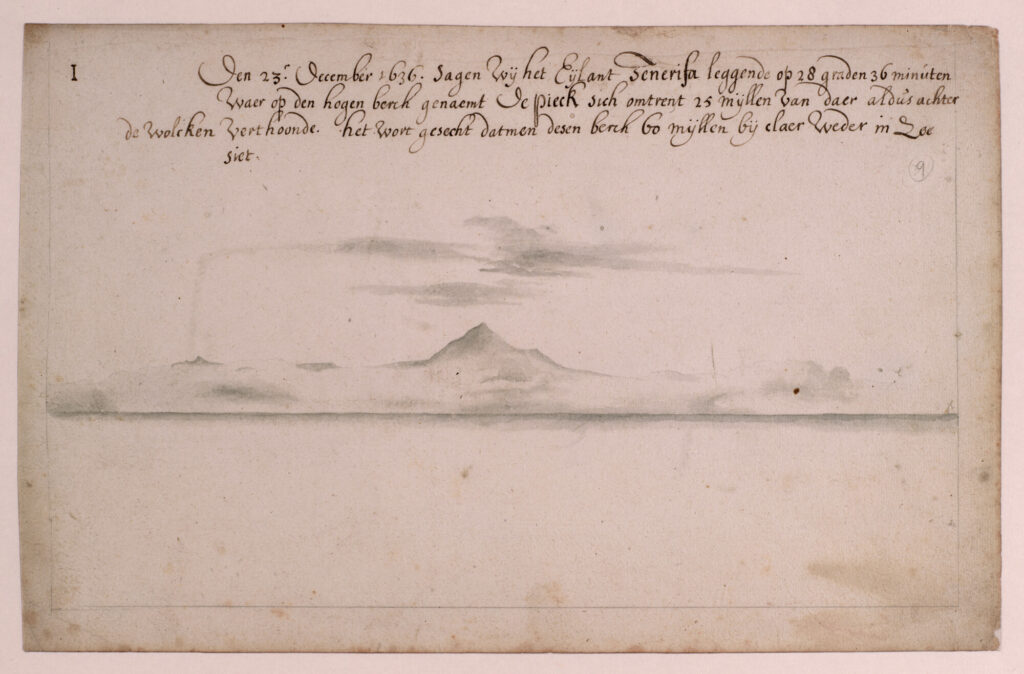
Meteorological phenomena are shaped by regional conditions, and their interpretation is predetermined by the site of observation. It was only with the advent of modern instruments that humanity could escape this trap.
Yet, the number of weather experts—formally trained or self-proclaimed—was remarkably high in the pre-modern era. Sailors recorded local weather in logbooks, farmers noted observations across estates and regions, and artists captured the signs of the sky in images that referenced atmospheric patterns from an early stage. Although the transition from apprehending to comprehending, from experiencing to explicating, might appear seamless in the history of meteorology, contributors remained dependent on transferring their observed singular events into a systematic context. This required abstracting from the vantage point of their individual location: the open sea, the summit, the coast, the harbor, the studiolo, the library, the atelier, the cloister, or the cathedra. Each of these places was a site of insight that influenced, prefigured, shaped, and determined, in its own particular way, the act of understanding meteorological phenomena.
The point of departure for this interdisciplinary book project on the history of meteorology is the premise that the observation and explanation of meteorological phenomena were intrinsically tied to singular events and places. Consequently, the project aims to identify sites where individuals performed individual or systematic weather observations and to focus on how their practices and resulting insights relate to the geographical or architectural context in which they were conducted and gathered.
