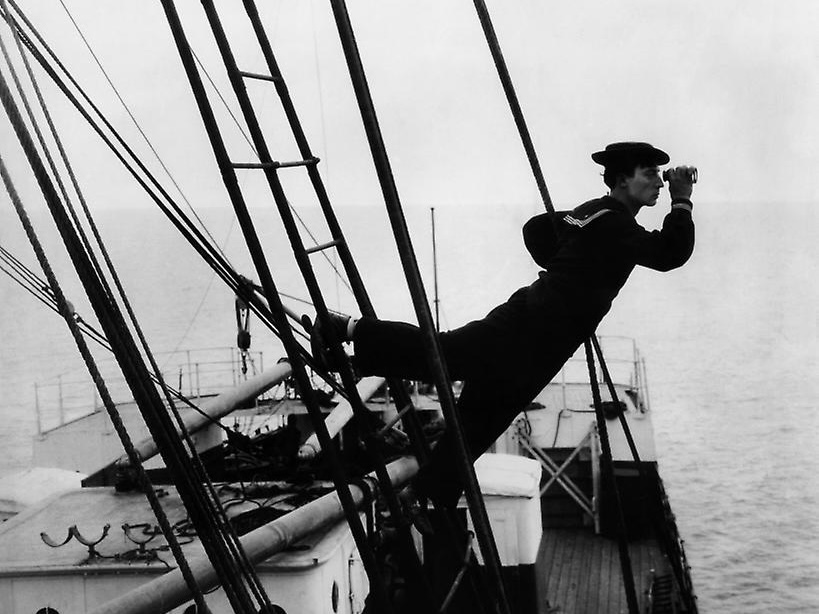
Whether along the coast, on the open sea, or underwater, film as a narrative and audiovisual medium offers virtually limitless possibilities for capturing the multifaceted dimensions of the sea. Jean Epstein once described the sea as the “ideal subject for the camera,” highlighting its unique visual and symbolic qualities that make it not only a preferred setting but also an autonomous protagonist in cinematic storytelling. However, a comprehensive study that precisely defines this theme is still lacking. This habilitation project addresses this gap, examining the central role of the sea as a motif and as an aesthetic experiential space in cinema through selected examples from film history. Film analysis and art historical approaches are interwoven in this process. At the heart of the project lies the question of how the sea functions in film as a setting and an artistic agent. The project aims to explore the real and imaginary topographies of the sea in film, thereby grounding its complex influence on cinematic art in theoretical and art-historical terms.
